Cat-egorically Clear Books
Running a service-based business means wearing many hats—but bookkeeper doesn't have to be the one that makes you want to hide under the desk like a scaredy-cat. Cat-egorically Clear Books is where St. Petersburg small business owners (and beyond!) come to get their paws on practical, judgment-free bookkeeping guidance. From QuickBooks tutorials that won't make you hiss in frustration to tax prep tips that are the cat's meow, we're making financial management clearer—no kitten around. Consider this your purr-fect resource for taming those wild finances, one post at a time.
Receipts 101: What the IRS Actually Requires You to Keep
Receipts 101: What the IRS Actually Requires You to Keep

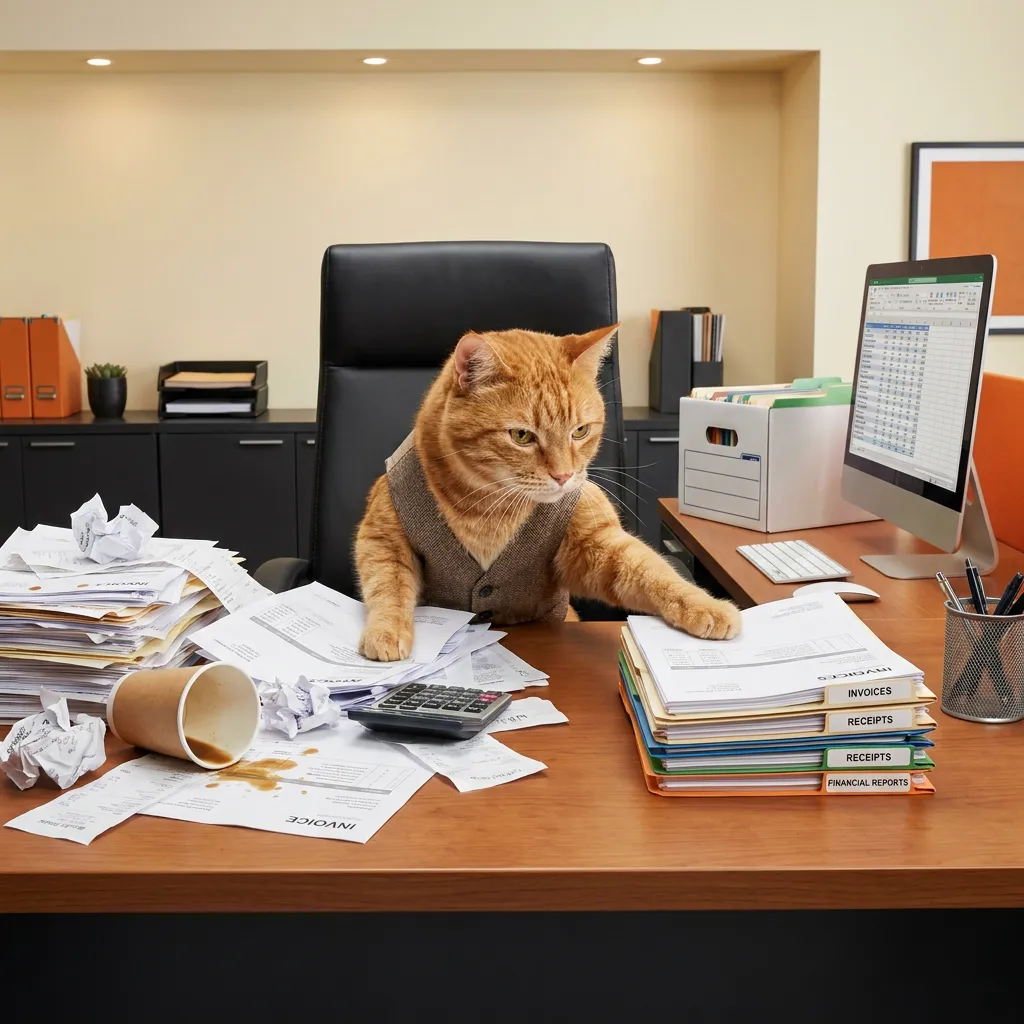
If you've ever stuffed a gas station receipt in your glovebox "just in case," then found it three months later as a faded gray ghost of paper — you already know the real question here isn't "should I keep receipts." It's "what actually counts, and for how long?"
Good news: the IRS doesn't require a shoebox. It requires a system. Here's what that means in plain English.
What the IRS actually wants
The IRS's own guidance is refreshingly loose on format and specific on purpose: your records need to "clearly show your income and expenses." That's it. No mandated app, no required paper trail — just documentation that backs up what you claimed on your return, organized well enough that you (or your bookkeeper) can actually find it.
What counts as documentation depends on what you're proving:
Income (gross receipts): deposit slips, receipt books, invoices, 1099s, cash register tapes
Purchases (things bought for resale or materials): invoices, canceled checks, credit card statements, cash register receipts
Expenses (day-to-day costs of running the business): invoices, account statements, credit card receipts, proof of payment
Assets (equipment, property, anything depreciable): purchase and sale invoices, closing statements — anything showing the purchase date, price, and later improvements or depreciation
Notice what's not on that list: a vague memory of "I think that was a business lunch." If it's not written down somewhere, it's not a deduction the IRS will back you up on if you're ever asked.
Digital receipts count — yes, really
A photo of a receipt, a forwarded email confirmation, a PDF invoice saved to a folder — all of these are legitimate records, as long as they're legible and you can retrieve them when needed. You do not need to keep the original paper once you have a clear digital copy. This is genuinely good news if your car's glovebox currently doubles as a paper shredder.
How long do you actually need to keep this stuff?
This is the part people get wrong most often — usually by over-keeping everything forever, which is its own kind of chaos. The IRS ties your retention period to your "period of limitations" — basically, how long they (or you) can still act on that tax year:
3 years — the standard rule for most records, tied to how long the IRS generally has to audit a return or you have to file a claim for a credit or refund
6 years — if you underreported your income by more than 25% of what's shown on your return
7 years — if you're claiming a loss from a bad debt or worthless securities
Indefinitely — if you didn't file a return for that year, or if you filed a fraudulent one (not a category anyone reading this needs to worry about, but it's on the list)
Employment tax records — keep these for at least 4 years after the tax becomes due or is paid, whichever is later
Our practical rule of thumb for most small service-based businesses: keep three years of records easily accessible, and don't be in a rush to delete anything before year four if you can help it. Storage is cheap; scrambling to reconstruct a deduction during an audit is not.
Where I stop and your tax pro starts
This post covers the recordkeeping side — what to save and for how long. It's not a substitute for advice on your specific filing situation, especially if you've got a more complex return, prior-year amendments, or an active IRS inquiry.
I'm not a tax expert, and this content is for educational purposes only — not personalized tax advice. Please consult your Enrolled Agent, CPA, or other qualified tax professional when you need guidance specific to your situation.
The takeaway
You don't need a perfect filing system. You need a consistent one — something that catches receipts before they turn into glovebox confetti, and keeps them somewhere findable for a few years after you file. That's genuinely most of the battle.
If your current "system" is a pile and a prayer, that's exactly the kind of thing we help small business owners fix — no judgment, just a better setup going forward. Reach out if you'd like a hand getting your records organized before tax season sneaks up again.
Sources:

Two Cats Bookkeeping
Serving small businesses in St. Petersburg, FL & across the U.S.
QUICK LINKS
READY TO GET STARTED?
© 2026 Two Cats Bookkeeping. All rights reserved.